The third piece in our series from SEAT 2026.
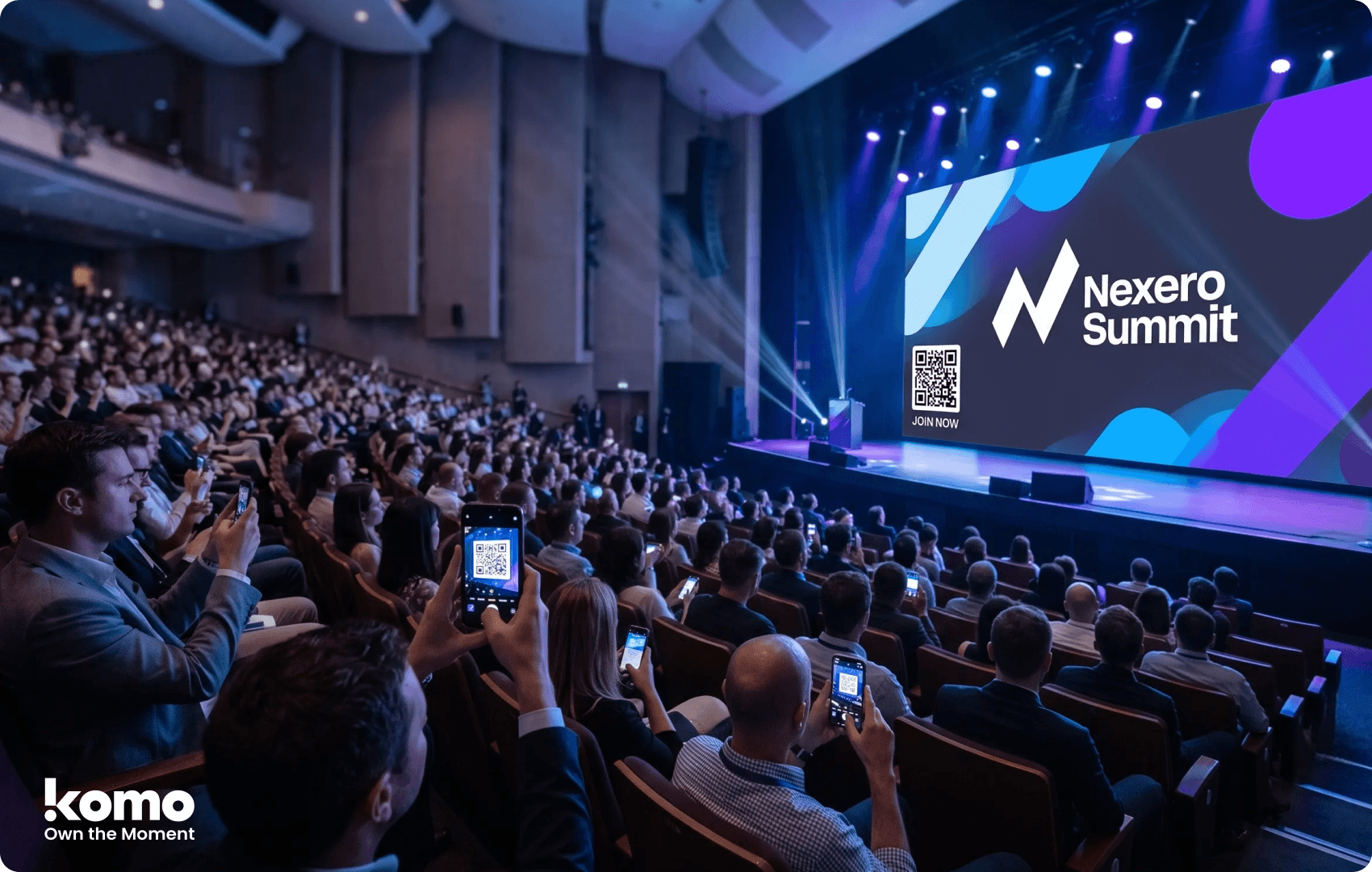
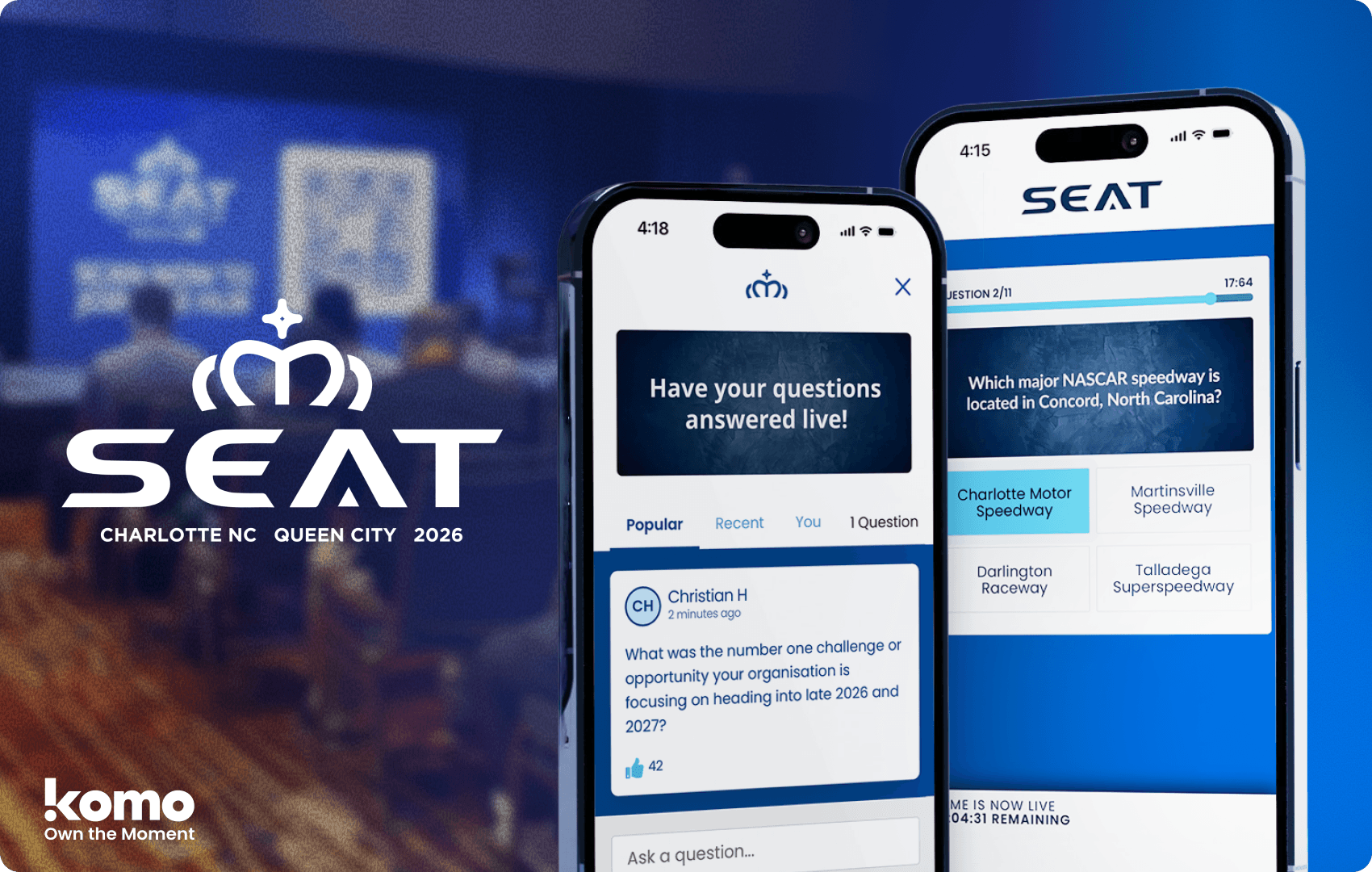
At SEAT 2026 in Charlotte, where Komo was the official audience engagement partner, a session ran under one of the bluntest titles on the agenda: "Say no to logo slap." It drew a crowd for a reason. The majority of everyone in the room has sold a logo on a screen, and those same people suspect the buyer is no longer satisfied with it.
Start where the sponsor is sitting. On the other side of the renewal table is a marketer or commercial leader who has to walk back into their own business and justify the spend to a CFO. A photo of the branded stand and a reach estimate used to be enough. It isn't any more - not because reach stopped mattering, but because that evidence no longer answers the question their board is asking.
Reach still has a job. Logo slap was never good at it.
It's worth being fair to reach. Awareness is real work, and mass exposure is a legitimate thing for a sponsor to buy - plenty of brands are rightly at the top of the funnel, trying to be known. Participation doesn't replace that job.
But "say no to logo slap" isn't an argument against reach. It's an argument against the waste in how reach is usually sold. A logo on a screen is unmeasured, undifferentiated exposure that produces nothing beyond the moment it's seen. It underdelivers even for the brand that only wanted awareness - and it gives the brand that wanted more nothing to build on. The problem with logo slap isn't that it chases reach. It's that it stops there.
What the sponsor brings to the table now
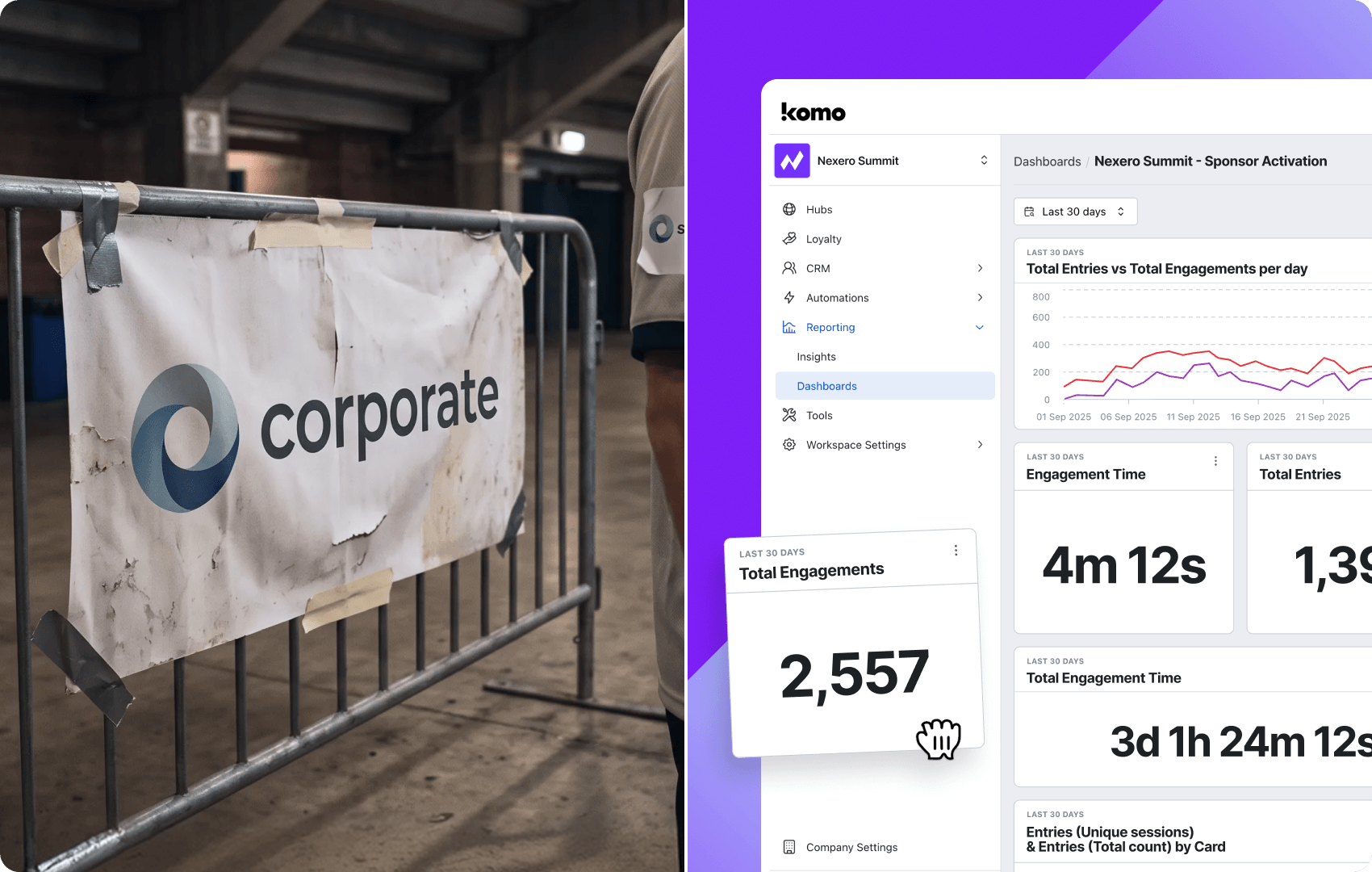
What sits above logo slap is engagement - and it's what a sponsor is increasingly there to buy. Not a crowd that saw the brand, but an audience that did something with it: played, predicted, voted, entered, opted in. Participation is what turns a logo into a relationship, and a crowd into names.
That shift does two jobs at once, and both matter. It lets the sponsor's investment be proven - you can show which identified people engaged, what they did, and what they did next, rather than estimating who might have glanced up. And it lets the relationship grow - a sponsor activation that captures and rewards participation compounds into an audience the rights-holder can bring back, upsell, and re-sell to the next partner. For an event organizer, that's the difference between an exhibitor who rebooks and one who quietly doesn't. For a club, it's the difference between a renewal defended on trust and one defended on a record.
You can't backdate the proof
Here's the part the "logo slap" conversation usually skips. The record that proves and grows sponsor value can't be assembled the week before the renewal meeting. It has to already exist - built across the season, the tour, the event cycle, one activation at a time. A sponsor who asks "what did we get?" after the fact is asking a question the window to answer has already closed.
That's why this is a timing problem before it's a measurement problem. BCG's Beyond Media Rights offers the clean example: the Philadelphia 76ers ran more than 125 targeted fan campaigns in a single year, lifted fan participation by around 15%, and used those data-driven activations to help sell a major multiyear presenting-level sponsorship. The sponsorship didn't create the record; the record helped sell the sponsorship. It's a pattern we see across our own partners' programs, too - the activations built around participation, not placement, are the ones that walk into the renewal with a number already attached.
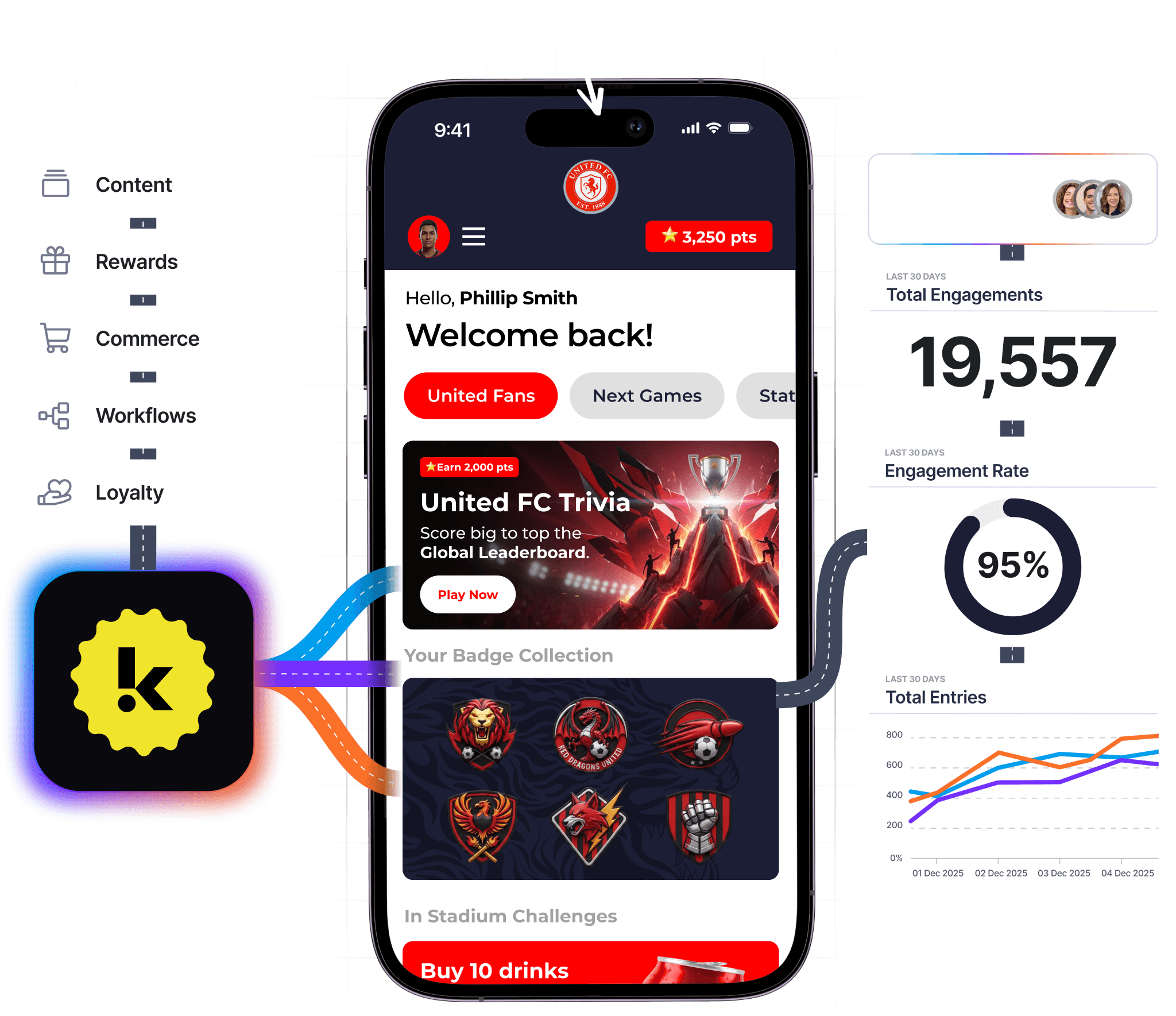
The mechanic underneath it is simple to say and hard to retrofit: give the audience a reason to take part, capture and reward that participation, and tie every interaction back to the partner who prompted it. Do it from the first moment, the first fixture, not the last, and the sponsor conversation stops being a pitch and becomes a review of what actually happened.
Reach gets a brand seen. Participation gets it measured, and renewed. The rights-holders and organisers winning the next cycle aren't the ones with the biggest screens - they're the ones building the record forward, so that when the renewal comes, there's nothing to backdate.
That's what we call the Engagement Engine.
About Komo
Komo turns the audiences you only reach - fans, attendees, guests, shoppers, viewers, members - into audiences you own and grow the value of. The mechanism is participation: people identify themselves by taking part, rewards and recognition keep them coming back, and every interaction compounds into a deeper connection, richer data you keep, and revenue you can grow and measure. One connected system - run it whole, use it to fill the gaps, or run it invisibly behind your own app - trusted by teams, leagues, broadcasters, venues and event organizers across the US, Australia, New Zealand and the UK.