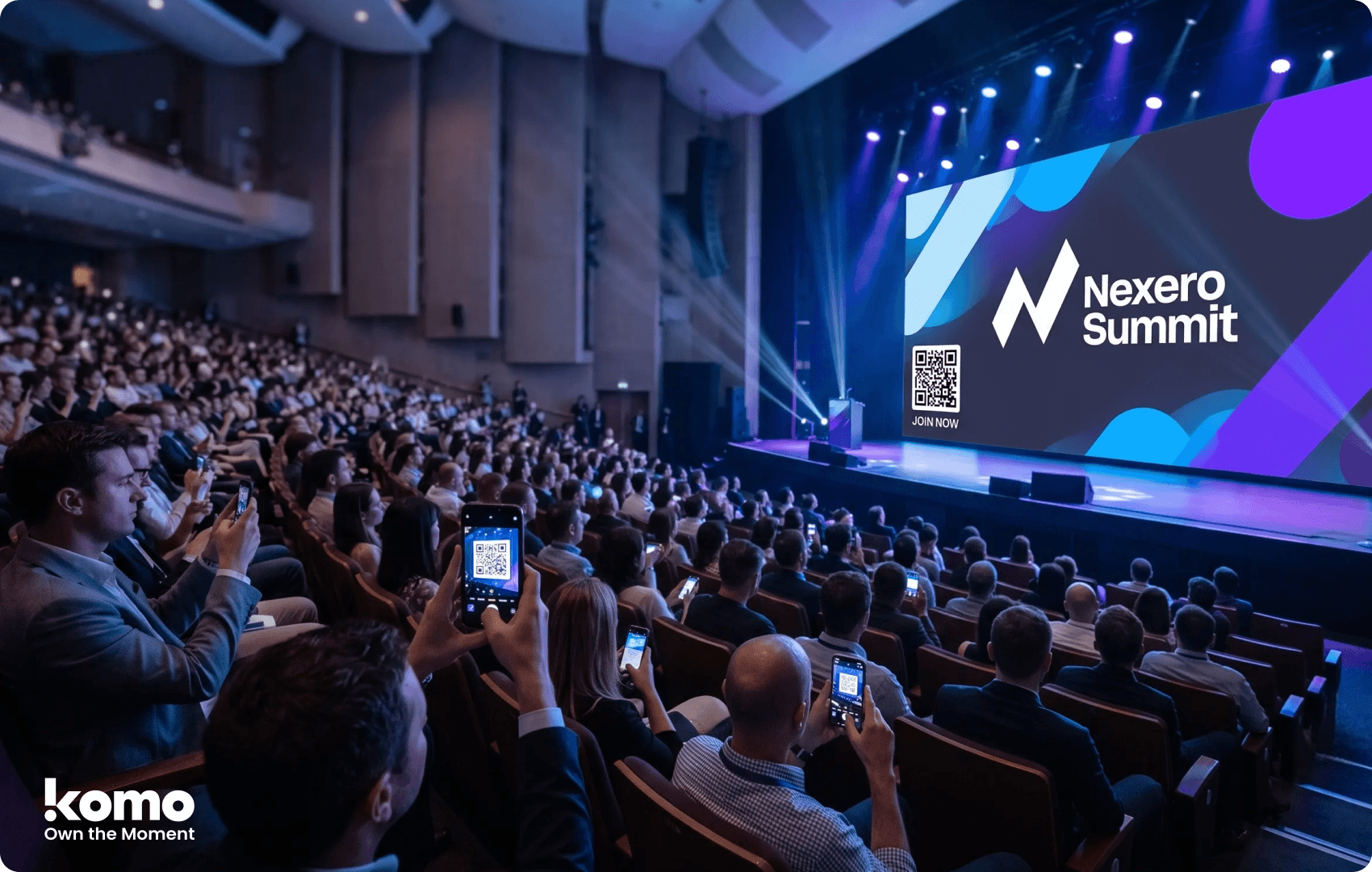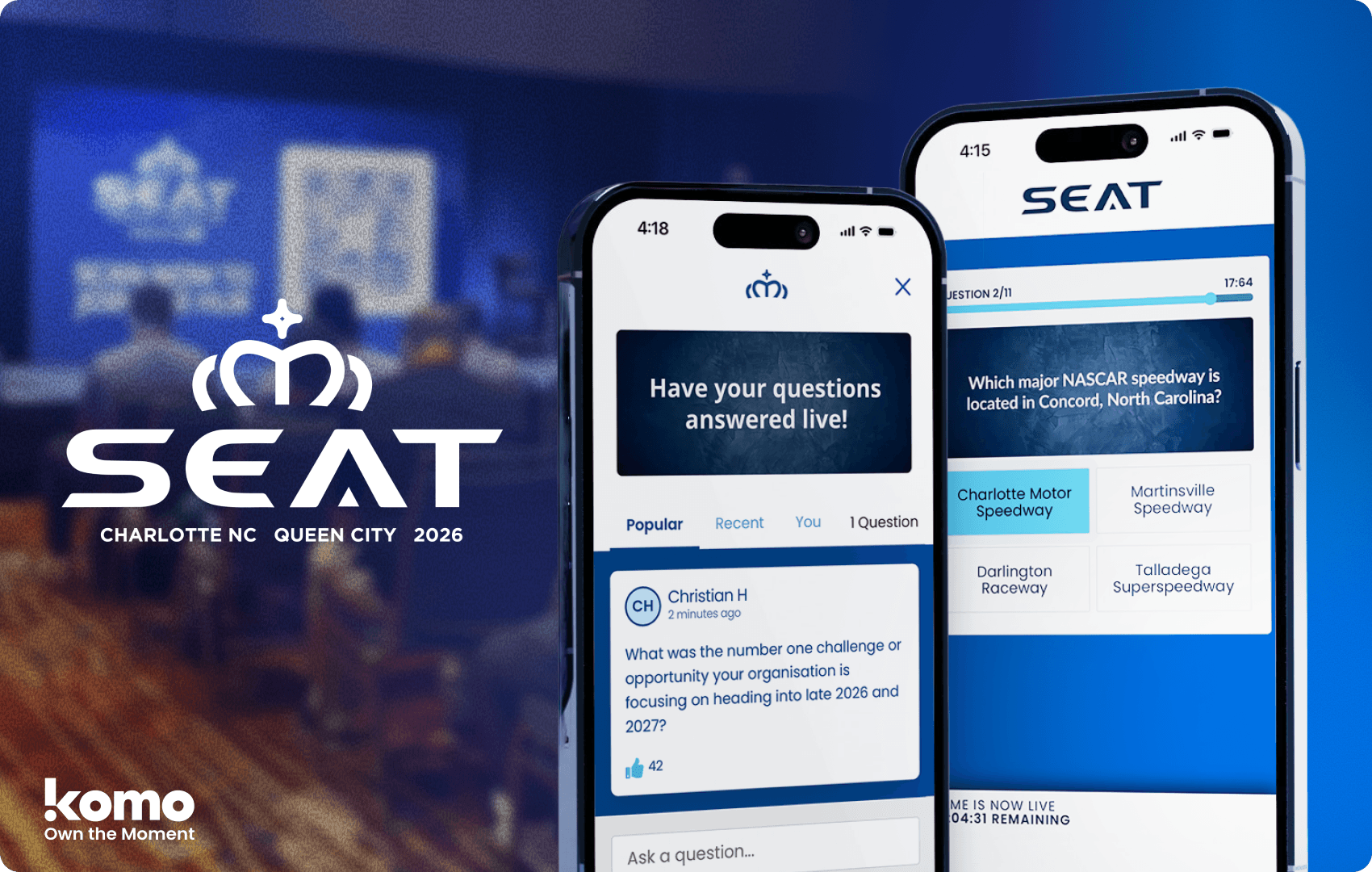
Among hundreds of venue, team and league leaders at SEAT in Charlotte, we were right in the thick of it as the official audience engagement partner - a useful vantage point for what a conference is really about. And SEAT 2026 kept circling on one core topic.
Picture the control room of a sold-out arena on a Friday night. Forty thousand people on the monitors - singing, filming, spending. The network holds every phone at once; the screens are pin-sharp. On every measure, the night is a triumph.
Now ask the operator a question: who are they? Not how many - who. The turnstiles counted them; ticketing has a name on the booking, usually one buyer for several seats. But who actually came, what they care about, whether they'll be back - in most venues and clubs, the honest answer is a shrug. Forty thousand people arrived, roared for three hours, and left about as understood as they came. That gap - between reaching an audience and knowing it - was the undertow beneath SEAT 2026.
From pipes to people: The identity shift
For years, the hardest problems were infrastructure ones: connectivity, access, the network that survives a full house. But the program has shifted - the majority of the conference tracks were about the person inside the building, not the building. One panel asked why properties leave millions in fan data on the table; another, "The Deed or the Lease," asked who actually owns your fan intelligence. This year the discussions were about who the audience is and what it's worth.
This is more than a change of subject. An anonymous audience is a commercial dead end - you can't segment it, personalize to it, or sell it to a sponsor. And most organizations are further from knowing their fans than they'd like to admit. BCG's finding, published in January, is that most sports organizations convert only a small fraction of their fanbase - even their most devoted core fans - into known, contactable ones. Across the sports BCG benchmarked, that conversion ran from as low as 1% to more than 60% - which is the opportunity as much as the problem.
It's becoming less survivable because the ground under audience data is shifting. Third-party data - the kind you rented - is dissolving. What's rising in its place is the data people give you directly - what they tell you about themselves, because you gave them a reason to. Which makes the audiences you can identify and keep the asset that appreciates while the rented ones evaporate.
The 365-venue and the invisible fan
Venues feel this as a mandate: the "365 venue," a building that earns all year, not just when the bowl is full. But you can't build a year-round relationship with people you can't identify. The same catchment comes through the same gates for the match, the concert and the expo - greeted each time as mostly strangers.
Clubs have the mirror image. Engagement spikes on matchday and flatlines between; for most of the season the fanbase is reachable in theory, invisible and inactive in practice. Audiences increasingly say the connection between events matters as much as the events. Treat the fixture as the whole relationship, and you train people to show up only for the fixture.
Turning reach into revenue
Put those together and the reframe from Charlotte is this: knowing your audience is no longer a customer-experience nicety but the commercial layer. Sponsor value, retention, the revenue the board asks about - all of it hangs off whether you can identify and hold the people you already reach. BCG expects it to be measured that way, too: daily engagement with known fans becoming a core operating and valuation metric - what they call a transition from audience reach to relationship depth. Fittingly, the closing keynote went to David Meerman Scott on fandom as the growth engine - and fandom, stripped back, is an audience you know well enough that it keeps coming back.
The organizations closing the gap aren't buying a better turnstile. They're giving people a reason to identify themselves - to play, predict, vote, compete - so reach becomes a name, and the name a profile that deepens with every interaction. That's the mechanism under the "own your audience" idea: not another data-capture form, but participation as the engine. Do it consistently and an anonymous crowd becomes a known, growing audience - and the commercial conversation changes with it.
None of this makes the infrastructure matter less; the fast network and sharp screens are the price of entry. But the return has moved. The venues and clubs that win the next decade won't be the ones with the best Wi-Fi in the concourse - they'll be the ones that turned a night in the building into an audience they own and grow.
That's what we call the Engagement Engine.
About Komo
Komo turns the audiences you only reach - fans, attendees, guests, shoppers, viewers, members - into audiences you own and grow the value of. The mechanism is participation: people identify themselves by taking part, rewards and recognition keep them coming back, and every interaction compounds into a deeper connection, richer data you keep, and revenue you can grow and measure. One connected system - run it whole, use it to fill the gaps, or run it invisibly behind your own app - trusted by teams, leagues, broadcasters, venues and event organizers across the US, Australia, New Zealand and the UK.