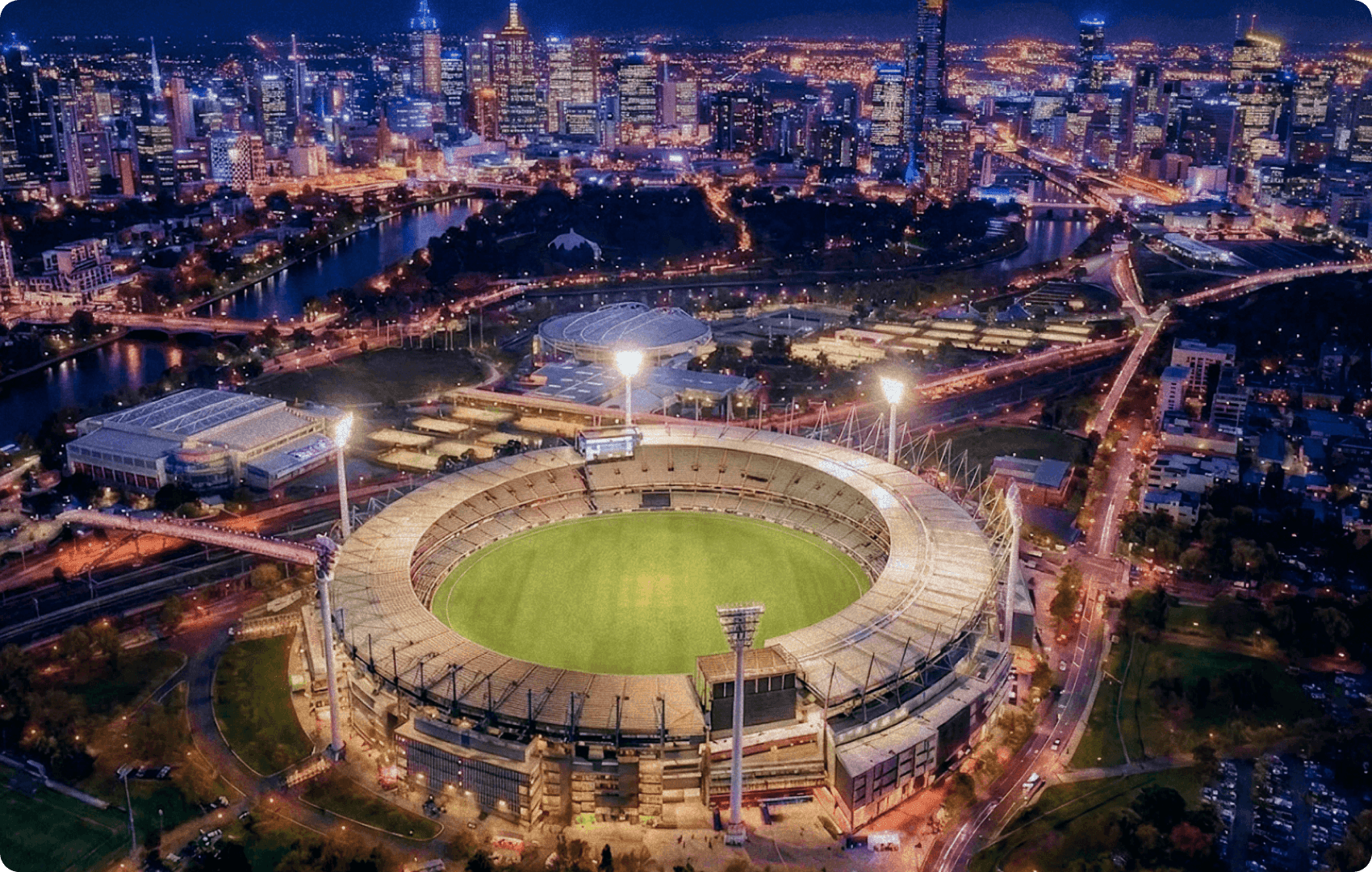
For one week in September, world sport's center of gravity shifts to Melbourne. SportNXT brings 1,000-plus leaders from more than 20 countries to the MCEC from September 7–9, and the city around them will be staging the kind of fortnight only Australia can: the NRL and AFL finals series both at full boil, the AFLW mid-season, the NBL and WNBL weeks from tip-off - and on the Friday, the Rams and the 49ers playing the NFL's first ever regular-season game on Australian soil, at a ground that has been gathering enormous crowds since 1853.
Earlier this week, it was announced that Komo will be at SportNXT as a partner - on the floor across the week, and on stage for a masterclass, before then showing up again for game day at the MCG!
Which is our license to name the question we think is sitting underneath the whole week.
The turnout country
There's a reason everyone is coming here. Australia - 27 million people - opens the tennis year with a Grand Slam and the Formula 1 season with a Grand Prix, fills grounds with international cricket all summer, sends a fleet to Hobart on Boxing Day, and runs many codes that pull crowds most of the world's leagues can only envy. The Matildas sell out stadiums, Bathurst turns a mountain into a campsite, and a horse race gets a public holiday. A hundred thousand people will sit at the MCG in winter rain and call it a good day out - ninety thousand did exactly that for a British & Irish Lions Test last year. And the pipeline keeps coming: a Netball World Cup and a men's Rugby World Cup in 2027, a women's in 2029, and the big one - the Olympics in Brisbane in 2032. When global sport looks for proof that a market will show up, it looks here - which is why it is really of no surprise that the NFL picked Melbourne for its first game outside its usual orbit, and why the sports business world now flies in every year to talk about its future.
Turnout is also the one number in sport that rarely has to defend itself. A full stadium answers most questions before they get asked - the gate figure fills the report, the broadcast figure fills the deck, and both deserve their place. The quieter question sitting underneath, what do we actually know about the people in the crowd, is one the rhythm of a packed calendar rarely forces. That's not a failing on anyone's part; it's what being this good at gathering crowds naturally produces.
The agenda already knows
Walk SportNXT's published program and you can watch the industry circling that exact question. One breakout stream is titled From Audience to Relationships. Another opens with The New Rules of Engagement. A third runs Fandom Rewired: The Next Generation of Fans. There's an entire stream on AI. And on the main stage, the marketing session is framed around brands "asking more of sport than reach and awareness, seeking measurable impact, deeper fan connection and greater strategic value" - the program's words, not ours.
Squint, and three of the four breakout streams and a good share of the main stage are about the same thing. It isn't how to gather a crowd. This market solved that long ago. It's what anyone actually knows about the crowd once it's gathered.
The gap is bigger than it feels from inside a full stadium, and it runs in one direction. Altman Solon's new Global Sports Survey found fans under 35 already spend nearly three times as long with non-live formats as with live broadcasts - not because they've stopped turning up to the live thing (this is Australia; they haven't), but because fandom keeps growing in the hours around it: the highlights, the short-form, the social threads that never pass a gate or sit through a full broadcast. The crowds aren't shrinking. The share of fandom that happens where sport can count it is. And of the crowd sport does catch - at the gate, on the broadcast - very little converts into a relationship: BCG's benchmarking puts the share of core fans who are known and contactable as low as 1% for some organizations.
And the stakes here are anything but small - ING's research with YouGov puts Australians' spend on their fandom at more than $19 billion a year: from spending at the game, streaming all season, jerseys, holidays planned around fixtures. Together, those findings describe a strange position for one of the world's best sporting markets to be in:
Fandom here has never been bigger or more valuable - and the relationships underneath it mostly stay one transaction deep. The interesting question is why.
Composition, not volume
None of this is because sport lacks data. Most organizations in that MCEC audience hold more of it than ever - ticketing, membership, retail, app, broadcast, social - and run capable teams over the top of it. The catch is composition.
Nearly all of that data comes from the fans who already transact: the members, the ticket buyers, the merch purchasers. They're the minority - and even they are known mostly one purchase at a time. The majority - the broadcast audience, the social following, the person who comes twice a year that didn’t buy the ticket - are counted, never known.
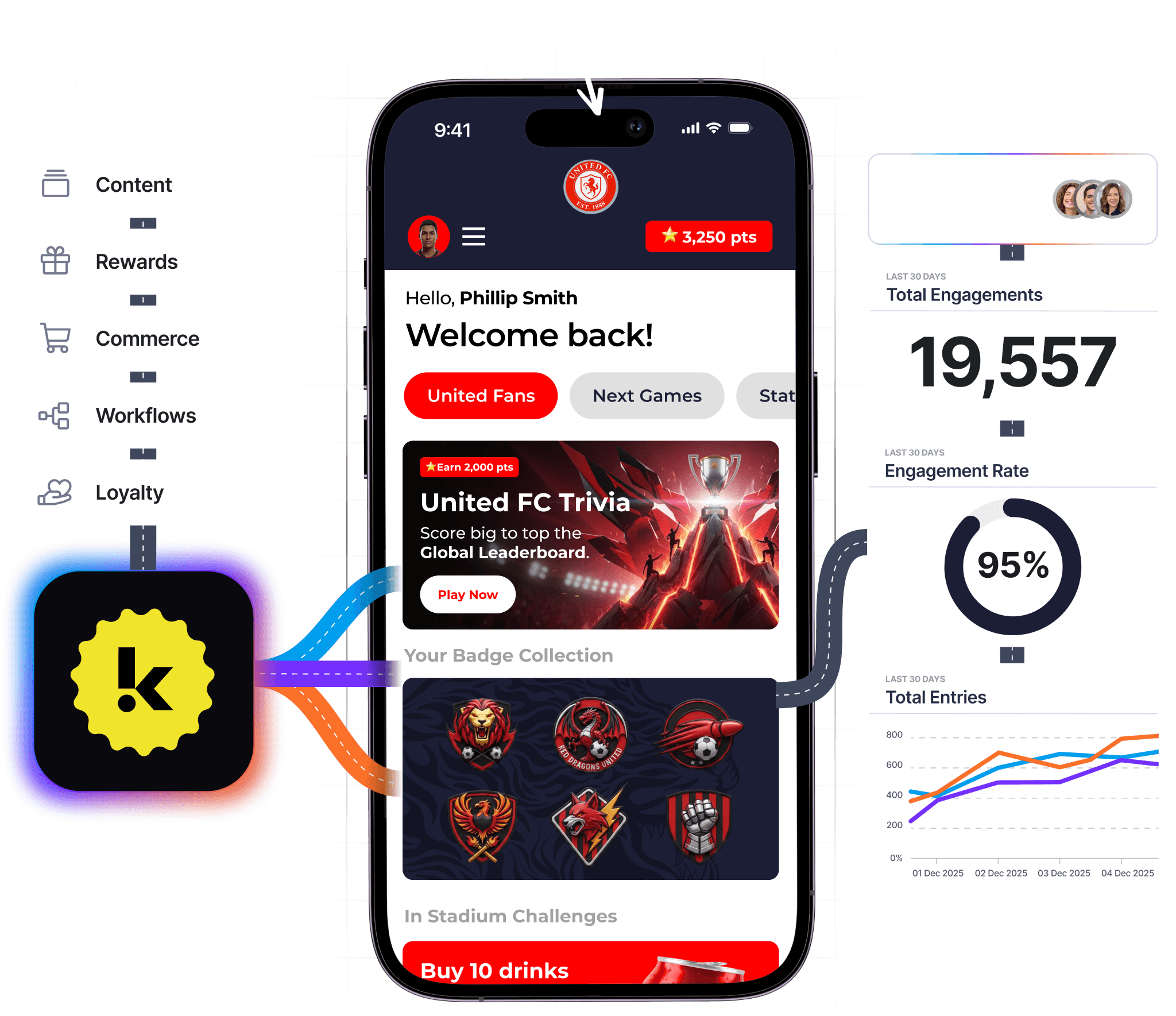
That's also why the AI stream matters more than it might admit. Every personalization and AI investment being budgeted in that room runs on whatever data sits underneath it. A model trained on transactions can tell you what a fan bought. A model trained on declared preference and demonstrated behavior can tell you what matters to them and what they’re more likely to do next. Same tool, same license fee - the difference is decided by the input. And the input gap isn't only about the fans outside the database: a transaction history is a thin way of knowing even the member who renews every year. Closing it is one job with two halves - giving the fans sport has never met a reason to introduce themselves, and giving the ones it already holds a reason to keep saying more than a purchase ever could. Both happen the same way: by playing, predicting, voting, taking part. It's the one input the existing stack can't generate for itself, and it's the exact problem Komo was built for.
Which brings it back to September. The fortnight around SportNXT is one of the biggest audience-gathering moments Australian sport has ever staged: finals crowds thick with the fans no database holds, a new code building a following from something close to a standing start, leagues opening seasons and setting about re-engaging audiences that went quiet the day the last one ended. And then, quickly, it all passes. The sirens go, the lanyards come off, the opening-round momentum dissipates, the NFL flies home - and every one of those record crowds becomes one of two things: the beginning of an audience an organization keeps, or a proud number in a report about a great fortnight. Only one of those is worth more next season. The organizations that choose it will leave September holding something rarer in this country than a record crowd: an audience they actually know - and won't have to buy back from cold when the next season comes around.
Turning one into the other - a crowd you gathered into an audience you know - is what we call the Fan Engagement Engine. It's the conversation we'll be bringing to Melbourne - if you’re at SportNXT or coming to the NFL, get in touch!
About Komo
Komo turns the audiences you only reach - fans, attendees, guests, shoppers, viewers, members - into audiences you own and grow the value of. The mechanism is participation: people identify themselves by taking part, rewards and recognition keep them coming back, and every interaction compounds into a deeper connection, richer data you keep, and revenue you can grow and measure. One connected system - run it whole, use it to fill the gaps, or run it invisibly behind your own app - trusted by teams, leagues, broadcasters, venues and event organizers across the US, Australia, New Zealand and the UK.
-Apr-28-2021-07-16-13-74-AM.png)